

The Game Industry has published the status of annual global trophy openings, and this year Brazil is the only country that has sacrificed “temporal” regulatory measures to prohibit the supply of trophysics to all players under the age of 18, although the ban is almost difficult to enforce. Most other countries continue to follow a more “ordinary” path: promoting transparency and prohibiting bad marketing by applying consumer protection laws.
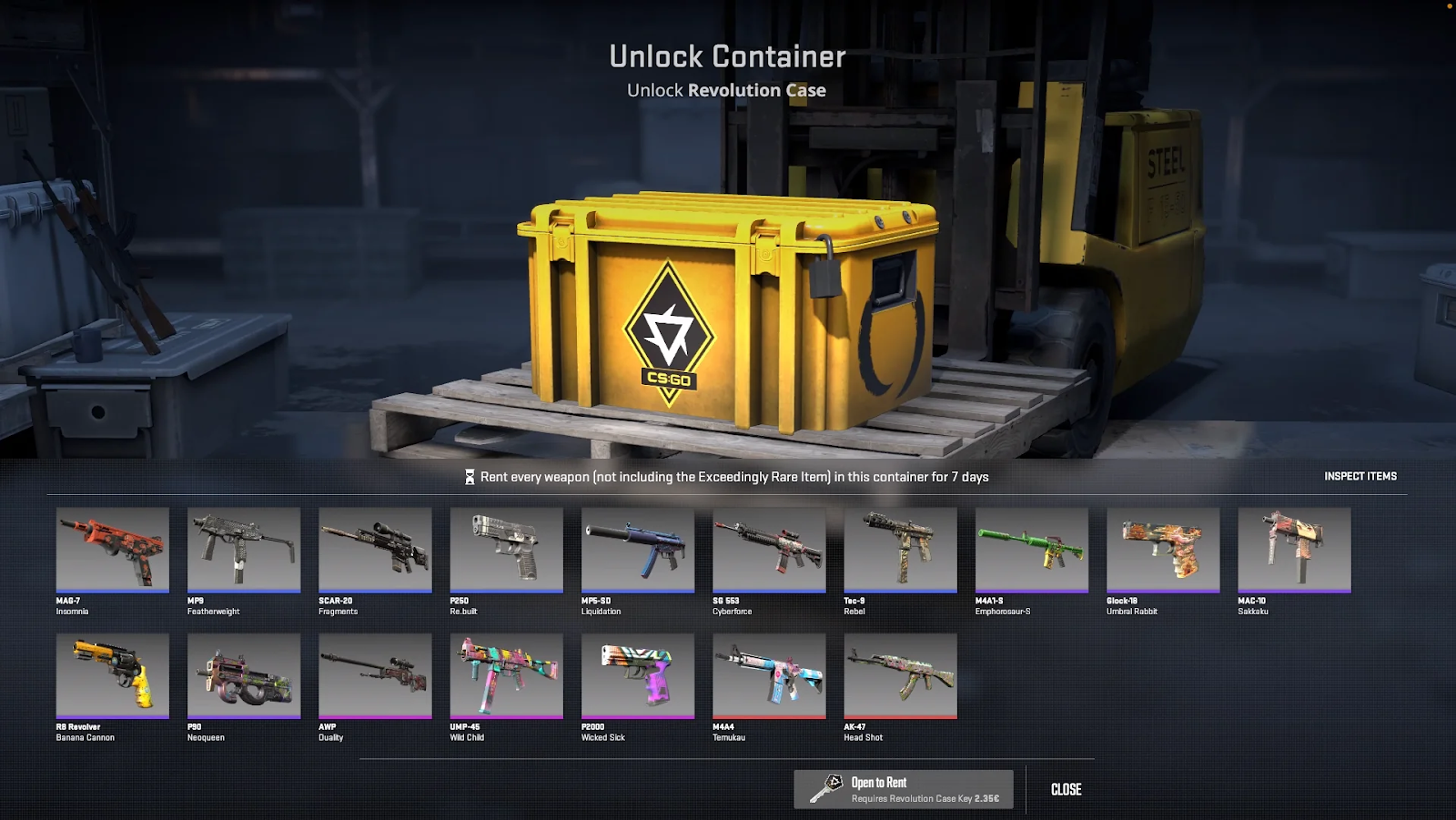
United States: FTC reached a consumer-rights settlement with the issuer of The Gods.In January 2025, the United States Federal Trade Commission (FTC) announced a regulatory settlement with Cognosphere, an international publisher of The Gods. FTC accused him of violating the children ‘ s privacy and consumer rights regulations (Cognosphe was not evaluated), agreed to pay a $20 million fine and made a critical commitment to adjust game design and business mechanisms. This is less than 4 per cent compared to the $520 million settlement reached with Epic before the FTC on the issue of children ‘ s privacy and consumer rights in Fort Night. FTC ‘ s allegations include:1. Hypothetically and exaggerated the probability of a medium-term prize; 2. Payment of fees to host the publication of an open-box video that has been tampered with and the results cannot be realized; 3. Use of a variety of virtual currency exchange mechanisms to confuse children and blur the real-currency price of the box. Although no determination has been made as to whether the above-mentioned conduct is unlawful and whether all of the following modifications are necessary, the United States-based enterprises should avoid the problematic conduct identified in the complaint. Cognosphere agreed to the following modifications:1. Users under 16 years of age are prohibited from purchasing trophies without the express consent of their parents (age verification); 2. The exclusive sale of trophies only through a virtual currency requiring French currency must be provided with the option to purchase them directly in French currency; 3. The number of trophies that can be purchased by each price virtual currency is shown directly in the virtual currency purchase interface, where the player is not required to perform additional operations, i.e. the realistic and accurate probability of obtaining a given rare incentive; 4. Cognosphere has begun to implement some of the modifications, but full compliance remains to be assessed, and the additional United States disclosure requirements have not been implemented elsewhere.
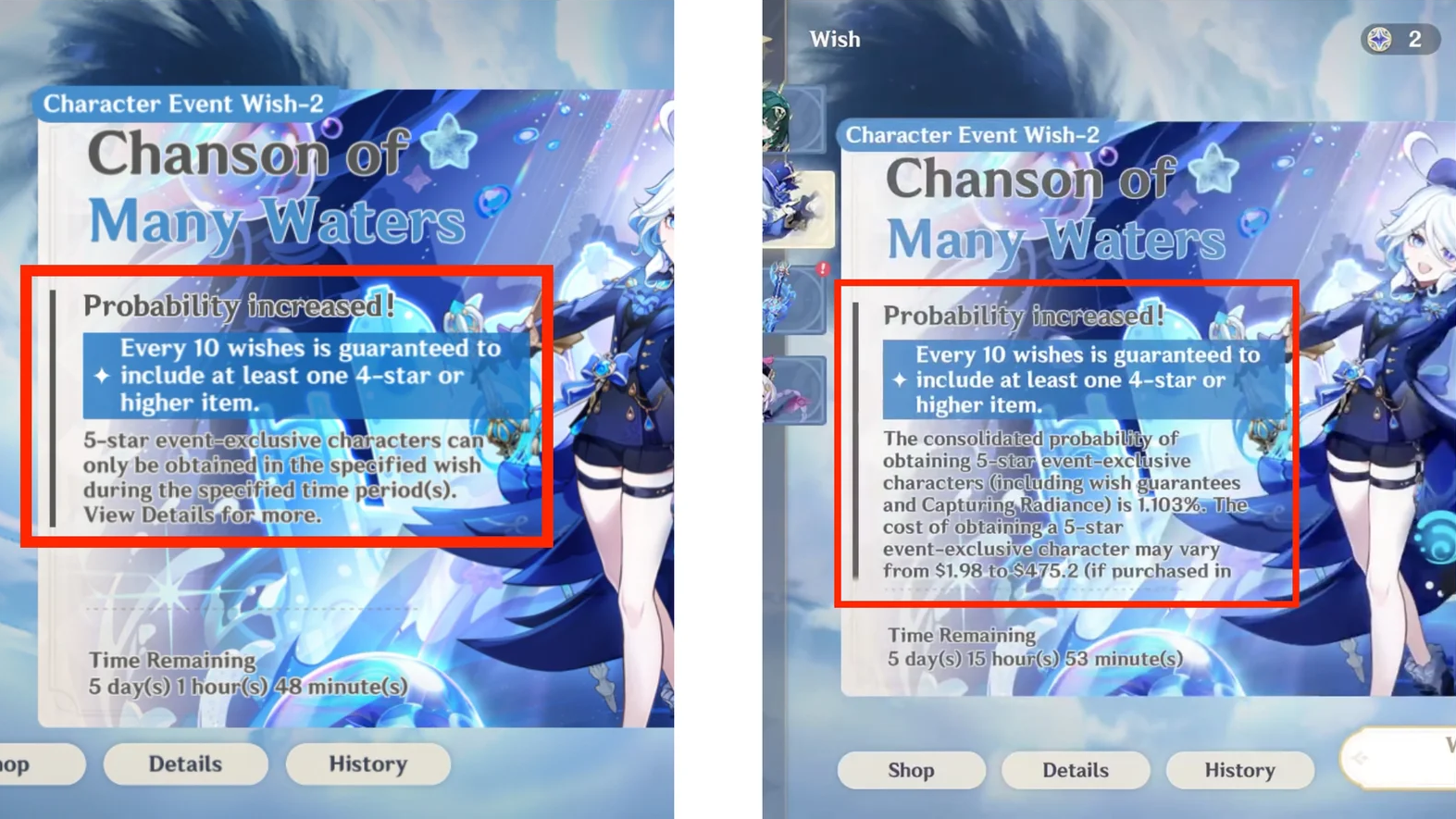
(The trophies of the trophies of the American version of The Gods will show additional information, while others will not)
It is a matter of concern that the reconciliation was announced in the last days of the Biden administration. Since then, the position of the FTC has changed significantly — the current Chairman, Andrew Ferguson, has challenged many of the provisions of the open and virtual currency as “prejudicing American consumers” and lacking evidence of damage, even though he himself “disappears not to the boxing mechanism”. In any case, the case reminded all jurisdictions that the application of the consumer rights law to video games was prohibited, regardless of whether gambling was involved.
Brazil: Prohibition of the supply of trophies to players under 18 years of ageIn September 2025, Brazil adopted the Youth Network Protection Act, which prohibits the supply to children and adolescents of trophysics that may be acquired by them (the House of Commons had tried to reduce the ban to a lack of specific design restrictions and damage control). The ban will enter into force in March 2026, but the details of its implementation (e.g. whether and how the age verification was conducted) have not yet been published. This is reminiscent of Belgium — a country that tried to “prohibit” but failed to enforce it because of lack of regulatory resources. In view of the difficulties of compliance and enforcement that prevail in international experience, the ban on Brazil is hardly optimistic. But Brazil is far ahead of Belgium in terms of the number of players and the size of its income, and firms should be reluctant to give up this lucrative market easily.

Belgium: Can illegal trophies be refunded?The Belgian position remains unchanged: the “prohibition” based on established gambling laws remains in force but is not enforced. A recent decision, however, raised concerns that Belgian players had sued Apple (as an app store operator and party to the internal purchase contract) for the return of the illegal open consumption of Top War, rather than against the game developer RiverGame. In the case LS v. Apple, it was confirmed that the payment of fees constituted illegal gambling under Belgian law, but in the case of the responsibility of the application shop to host games containing illicit goods, Apple claimed immunity on the ground of ignorance of the illegality of the specific game. The Court noted that apples should be aware of the widespread ban on the opening of boxes in Belgium, but it was not clear whether the widespread knowledge was sufficient to deny immunity. The Belgian courts have requested an explanation before the European Court of Justice, but a settlement between the parties was reached before the European Court of Justice. There may be more claims in the future against shops such as Apple, Google and others for the return of illegal trophy-opener consumption. Australia: 15+ age rating for trophy box gamesSince 22 September 2024, Australia has required a minimum M level for games containing “in-sourcing associated with random elements” (i.e., fee-opening). This applies not only to newly released games, but also to previously published games that follow up on the trophy boxes (e.g., new trophy boxes or new incentives). Although the policy was adopted one year ahead of schedule, the Government did not provide accurate and timely notification to the industry (especially the retroactive component) and the guidance was issued four days before its implementation — it was difficult for an enterprise to achieve informed compliance unless it incurred high costs for legal advice. A team study at the University of Sydney found that many of the best-selling cruises released before September 2024 have since substantially updated the contents of the trophy boxes, which automatically invalidated their original age ratings but did not increase them accordingly. Enterprises selling trophies in Australia should note that displaying an invalid age rating constitutes a federal and state/territory offence. EU: Virtual currency, protection of minors and the forthcoming Digital Equity ActThere have been three major developments in the EU, although there have been no substantive changes in the law:1. Virtual Monetary Key Principles (March 2025): With the support of the European Commission, the Consumer Protection Collaborative Network published the Virtual Currency Key Principles of the Game, reflecting strict interpretation by regulators (possibly exceeding actual legal requirements). The core requirements include that all internal purchases be shown at the euro equivalent price; and that players be required to exchange multiple layers of money before purchasing. Currently, most enterprises fear non-compliance.
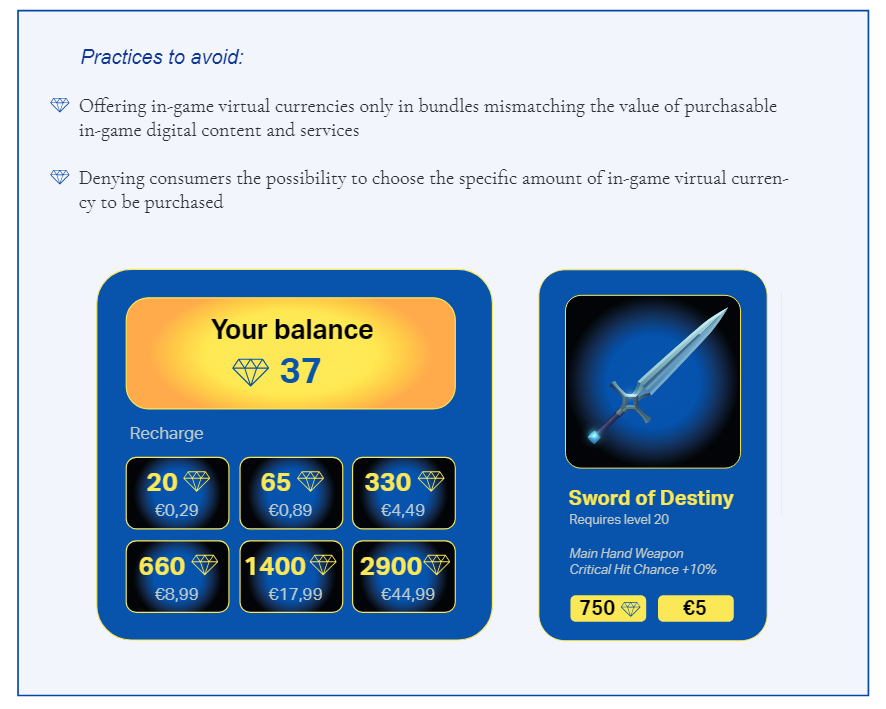
(EU indicates that the money in the game sold as a bundle does not match the actual value)
Guidelines for the protection of minors (July 2025): The European Commission issued a guideline for the protection of minors under article 28 of the Digital Services Act, which lists the opening of boxes as a consumption risk and requires that specific measures be taken to avoid “excessive or unnecessary consumption” of minors. This is almost the case with the Digital Services Act, which requires a ban on the sale of trophies for users under 18 years of age. 3. Consultations on the Digital Fairness Act (Summer 2025): The European Commission consulted on the forthcoming Digital Fairness Act, which is expected to include game regulations (in particular virtual currency and trophy box). Specific provisions have not yet been published and the draft is expected to be published by the end of 2026. Netherlands: My. Gomes Advertising AwardThe Netherlands Advertising Self-regulating Agency issued a comprehensive ruling against My. Gomes confirming that: the existence of trophy boxes must be disclosed on the product page of the app store; the probability of opening boxes to obtain different incentives (even if the probability is equal) needs to be disclosed; and the price of the euro equivalent (in line with the EU regulatory position) is to be shown for all purchases within the game. Both appeals by My. Gomes failed, wasted resources and delayed the publication of the judgement. United Kingdom: Inadequate enforcement of industry self-regulation and advertising decisionsThe industrial self-regulation principle of the British Interactive Recreation Association (UKIE) is generally poorly implemented, with low compliance and lack of enforcement. UKIE tried to refute the criticism but failed to face the obvious. The Government-commissioned impact study, which was due to be completed in March 2025, was still being finalized as of July 2025 and the date of publication was not yet set. The Advertising Standards Bureau issued three related decisions: decisions on Kabam and Nexters confirming that the list of products from the application store is to be disclosed (whether or not the game company is operating in the United Kingdom); and decisions on Hutch reiterating that the opening disclosure is to be visual (without additional user clicks) and that the probability demonstration is not to be misleading – – Hutch is misleading by presenting open boxes with unequal probabilities as equals.
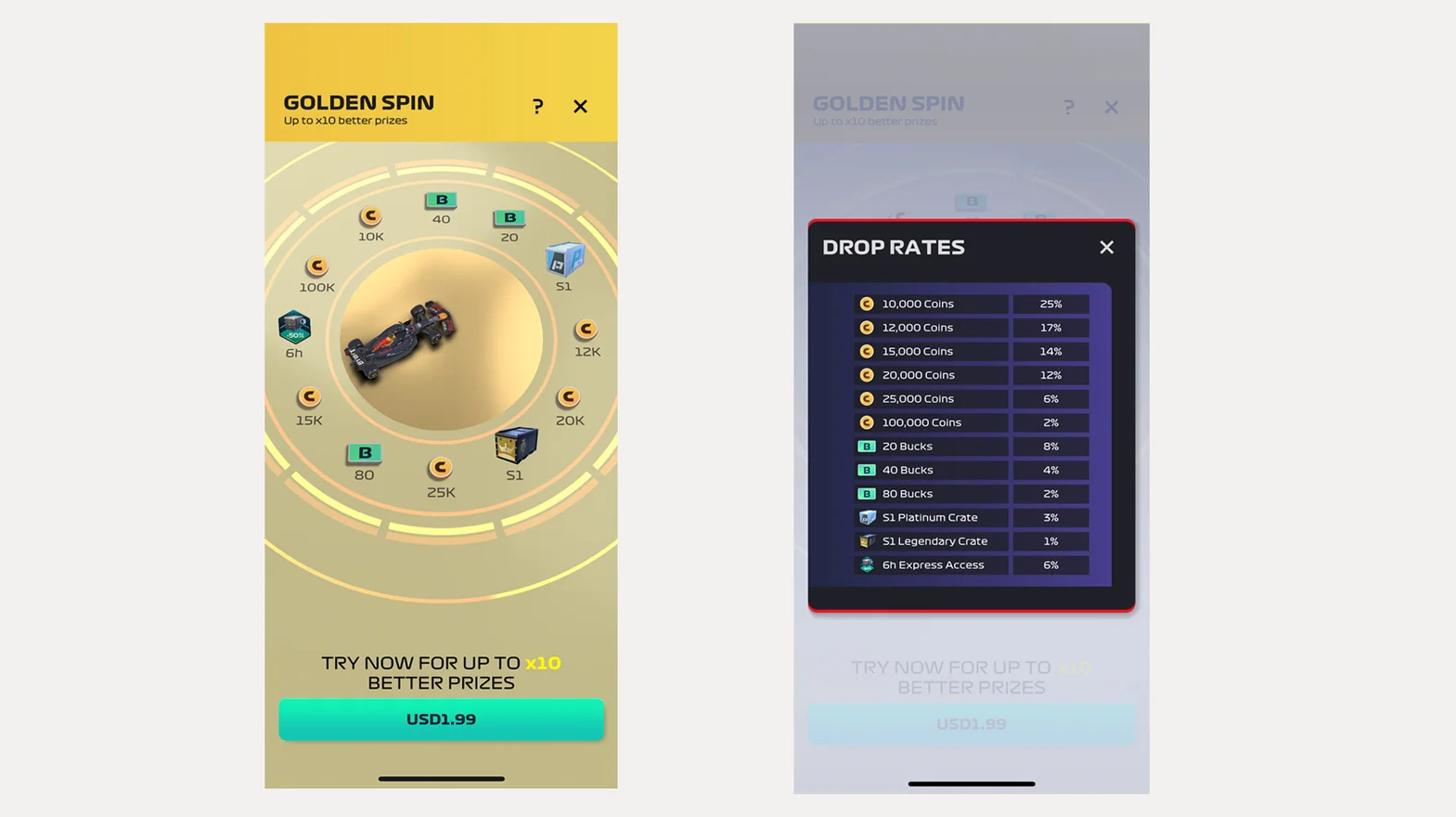
(Hutch adverts for F1 trophy box)
Korea: Probability and existence of disclosure requirementsSince March 2023, Korea has explicitly requested disclosure of the probability of opening boxes. Another less discussed requirement is that games advertising with trophies must be disclosed in Korean, “확률형 포함 포함 포함 (including probabilistic articles)”. The survey found that social media compliance was poor, that most companies were not disclosed and that a few were not in compliance in English. Turkey: Entity Mysterious Box Advertising AwardThe Turkish regulatory body found illegal the advertisement of the secret entity box on Instagram, which claimed to have random access to electronic products, because it failed to disclose the probability of different prizes and pressured consumers using false countdowns. This is relevant for the opening of the game, as the generic consumer rights law, which requires basic transparency and prohibits unfair business practices, applies equally to the global game industry. Global: Increased attention to box opening and game regulationThe International Consumer Protection and Enforcement Network (ICPEN) published an international survey of the game’s “misleading design practices” in June 2025. Although the research methodology is relatively preliminary and the problem is familiar, the involvement of ICPEN means that the regulatory vision is being directed towards this mature industry.