
Google’s recent submissions to the Tribunal acknowledge that “the open network is in sharp decline”, in sharp contrast to what it has publicly claimed over the past few months as “a web-based ecological boom.” The document was submitted in response to the next phase of the advertising technology monopoly case, and the United States Department of Justice proposed to split the Google advertising business, but the company warned that this would “expede the decline in open networks and harm publishers who rely on advertising revenues”.
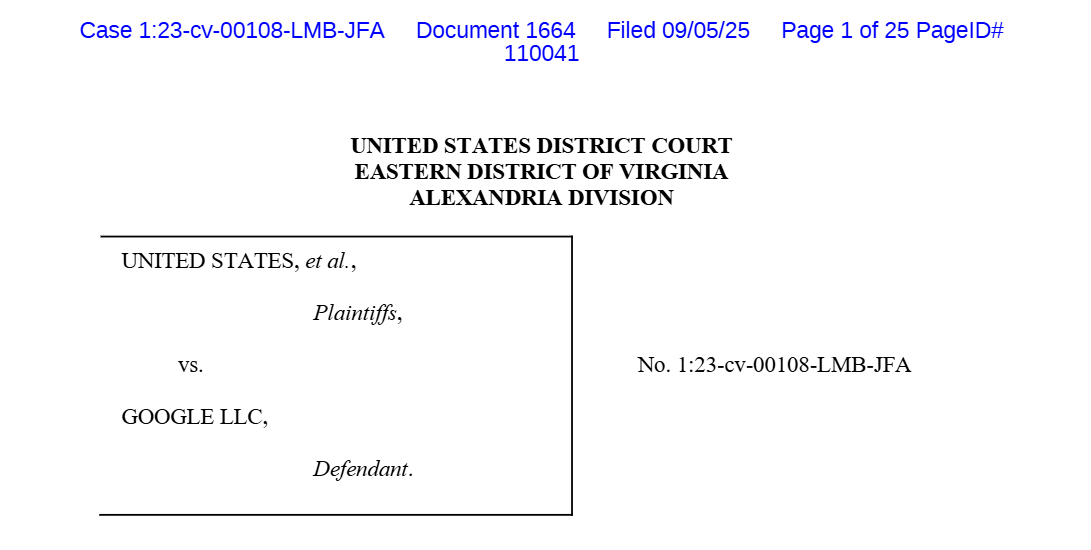
Google emphasized in the document that “the plaintiff’s insistence on splitting is as if the trial had never taken place — it seems that the ecology of advertising technology remained stagnant during the judicial proceedings. But the reality is that AI is reshaping the various levels of advertising technology, with the explosive growth of non-open Internet advertising, such as television and retail media, and competitions investing in new areas of growth. In fact, there has been a sharp decline in advertising on open networks, and the fragmentation programme will only make it worse.”
This statement is quite different from Google’s public position. In May, among Decoder podcasts, CEO Sandal Pichai claimed that the AI search tool “is sending traffic to a wider range of sources and publishers” ; Nick Fox, Senior Vice-President of Knowledge Business, also insisted in AI Inside podcasts that “web-based eco-prosperity development” ; and Liz Reed, Chief of Search Operations, cited data as “relatively stable” with billions of hits being sent to the website every day.
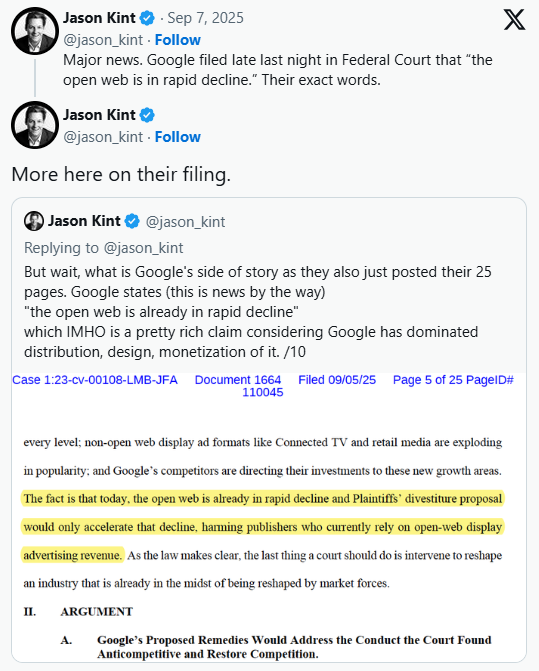
Google spokesman Jackie Bert, in his e-mail statement to The Verge, argued that the Court’s statement had been “hyphenated” and that the so-called recession referred only to “open network displays” and not to the whole open network, and stressed that “only to point to a clear trend: investments are going to non-open network advertising, such as on television”.
However, the actual experience of many publishers does not match Google’s optimism. Several digital media and stand-alone websites reported a continued decline in website traffic as Google search algorithms were updated and AI chat robots emerged. The Pew Research Centre report also confirmed that the willingness to click on the link was significantly reduced when users obtained the AI summary answer.
This law-and-public-saw war revealed the dual narrative of the technological giant: the emphasis on vulnerability in the courts to avoid fragmentation, and the strong position in the market to maintain investor confidence. As AI accelerates the re-engineering of Internet traffic distribution, the battle for the truth about the ecological future of the network may intensify.