

According to foreign media POLITICO, after eight hours of full-night negotiations, the EU legislature reached an historic agreement on Thursday to formally adopt the Payment Services Ordinance (PSR) and the third edition of the Payment Services Directive (PSD3). This set of regulations, known by industry as the “most stringent financial anti-fraud system”, for the first time made financial fraud on online platforms such as Meta, TikTok and others liable, marks an entirely new stage in EU digital regulation.

Under the new regulations, when social platforms are informed of the existence of fraudulent elements but have not been removed in a timely manner, they are jointly and severally liable to banks that have compensated their aggrieved customers. This groundbreaking clause directly recasts the rules for the allocation of responsibilities in the digital economy. The Danish member of the European Parliament, Morten Lekegor, who is responsible for promoting part of the legislative process, said: “This is a major victory and a major step forward. It will be a historic moment for us to change the status quo of the Platform without any legal responsibility.” This provision, based on an enhanced upgrading of the Digital Services Act, creates a complete chain of accountability: banks are required to pay for fraud committed by their clients as a financial institution, but if it can be proved that the fraud was reported to the platform but not addressed, the platform will have to compensate the bank for the loss. The new regulations set strict operating norms for payment service providers:Mandatory certification mechanisms: payment service providers must check the match between the recipient ‘ s name and the unique identifier and find that the transaction is not matched; dynamic wind control systems: strong customer certification and continuous risk assessment are required to provide a consumption limit setting and transaction blockage; full chain allocation of liability: transactions initiated by fraudsters are considered unauthorized, payment service providers (PSPs) bear the full loss and the recipient finds that suspicious transactions must be frozen immediately.
In response to increasing AI fraud, the legislation specifically provides that a customer who reports to the police and advises the payer of a service will receive a full refund if he or she suffers a loss of fraudulent institutional fraud. At the same time, financial service advertisers have to prove their legal qualifications on large platforms and curb fraudulent investment promotion from the source. The new regulations prohibit the payment of account services providers from taking discriminatory measures against third-party service providers. Mobile equipment manufacturers must allow front-end storage of payment data on fair and reasonable terms to break ecological barriers for innovative enterprises. Some EU parliamentarians stressed that existing EU consumer protection measures were inadequate given the surge in fraud caused by artificial intelligence and socio-engineering techniques. The new regulations are based on the Digital Services Act (DSA) and the Digital Market Act (DMA), which respectively aim at curbing illegal content transmission and preventing the excessive expansion of large online platforms such as Google, Amazon and Meta.

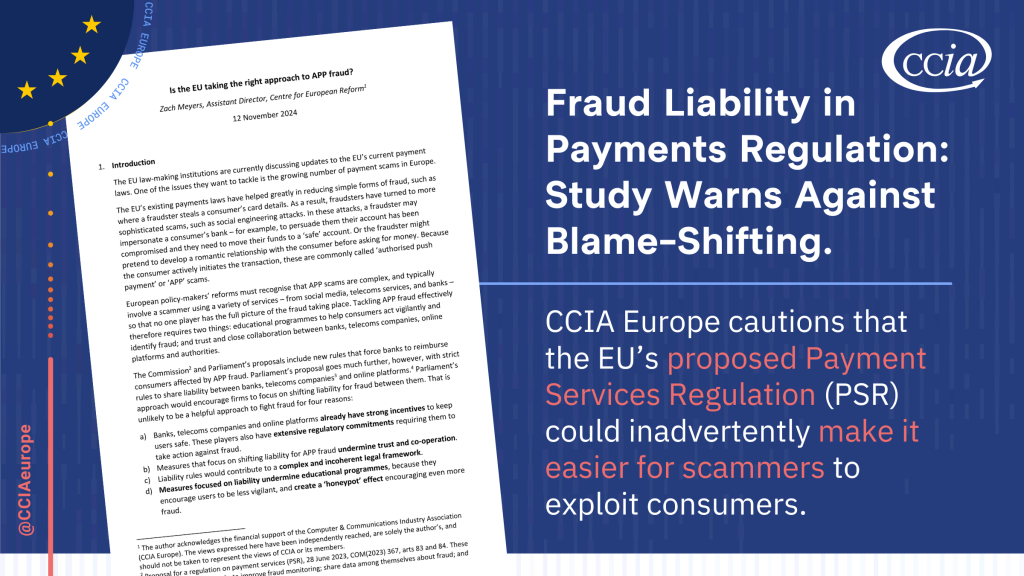
Violations of DSA and DMA are subject to substantial fines, which have triggered a rebound in the technology industry. United States President Trump had previously accused the European Union of discriminating against United States enterprises, and the Minister of Commerce, Howard Ratniken, threatened the European Union not to liberalize digital rules and would continue to maintain a 50 per cent tariff on European steel exports. According to Leonardo Veneziani, European Policy Manager for CCIA, representing Amazon, Google, Meta and Apple, “This complex framework runs counter to the original intent of simplified regulation and conflicts with the provisions of the Digital Services Act prohibiting universal surveillance, which several studies have warned will be counterproductive. Instead of protecting consumers, today’s results set a dangerous precedent by shifting responsibility from the subjects most responsible for preventing fraud.” But EU legislators are firm in their approach. “If banks fail to perform their duties, they will have to take on more responsibilities; if the platform allows fraud to spread, so will the price.” Regulator René Repasi stressed. This position reflects the EU ‘ s strong commitment to digital sovereignty-building and echoes a series of recent regulatory initiatives against the science and technology giant.