

The EU Citizen Initiative, launched by Game Protection, has collected nearly 1.5 million signatures, of which 129,4188 were validated by validity, well above the million threshold required to trigger the European Commission’s discussions. The Director-General of the organization, Moritz Katzner, had released the final data in Reddit in advance and had revealed that the original plan had been made public only before the next meeting with the European Commission.
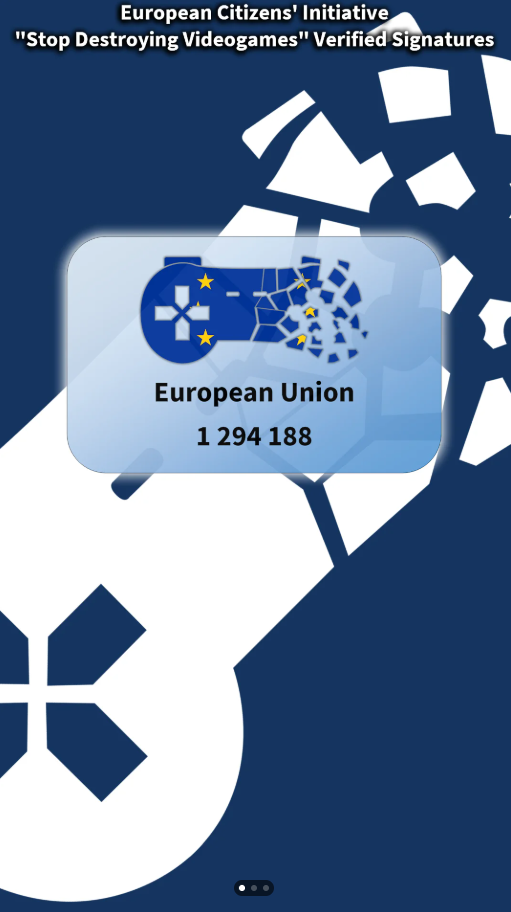
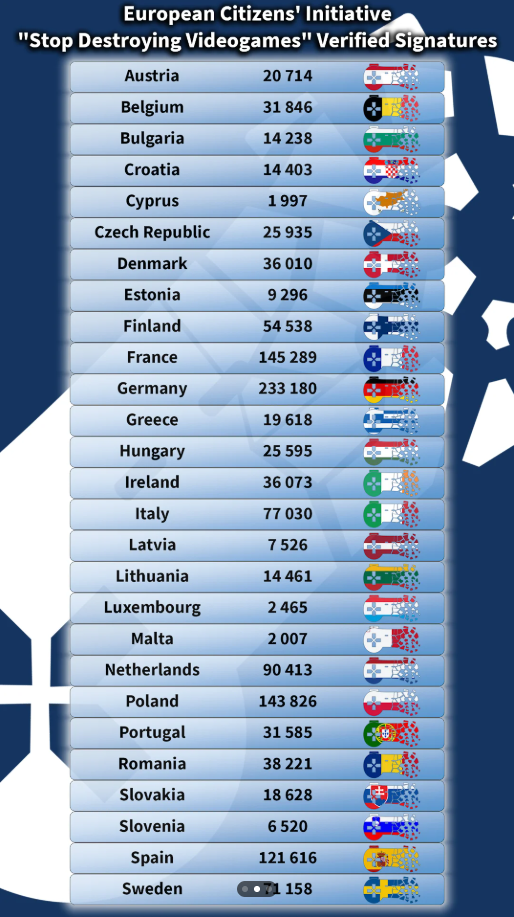
According to publicly available data, Germany became the largest contributor with 23,380 signatures, followed by France with 145,239 signatures. In his response, Moritz Katzna stated that the petition was one of the most successful cases of the EU Civil Initiatives platform: “We have an invalid signature rate of about 10 per cent, and other initiatives with the best performance are usually in the range of 10-15 per cent, while some are as inefficient as 20-25 per cent. However, the overall sample is small, with only 11 initiatives.”
The “Stop Killing Game” campaign began with the online racing game “The God of Hot Cars” in 2024, which was closed for 10 years. By July 2025, 1.2 million votes had been cast and the European Games Association had responded. The Association stated: “We understand the enthusiasm of the community, but the decision to terminate the online service involves multiple factors and is by no means reckless. Enterprises must retain this option when online experience is no longer sustainable. The industry will ensure that players are informed in advance of local consumer protection laws.” The British version of similar petitions has only collected over 10,000 signatures, and the Ministry of Culture, Media and Sport responded that “British law does not oblige software companies to maintain older versions of systems, software or networked products. When the base number of users of the game falls, the enterprise may make commercial decisions because of the high cost of maintaining the old server.”

Earlier this year, Maciej Gołębiewski, Director of the GOG platform, warned that developers and distributors might reduce the number of game developments if the game was forced to be permanently online. As the petition reaches its target, the European Commission will formally take up this legislative initiative on “compulsory game service providers to remain online”. This marks the first time that a player ‘ s claim to ownership and preservation of digital content has entered the EU legislative agenda, with potentially far-reaching implications for future online game service norms.